

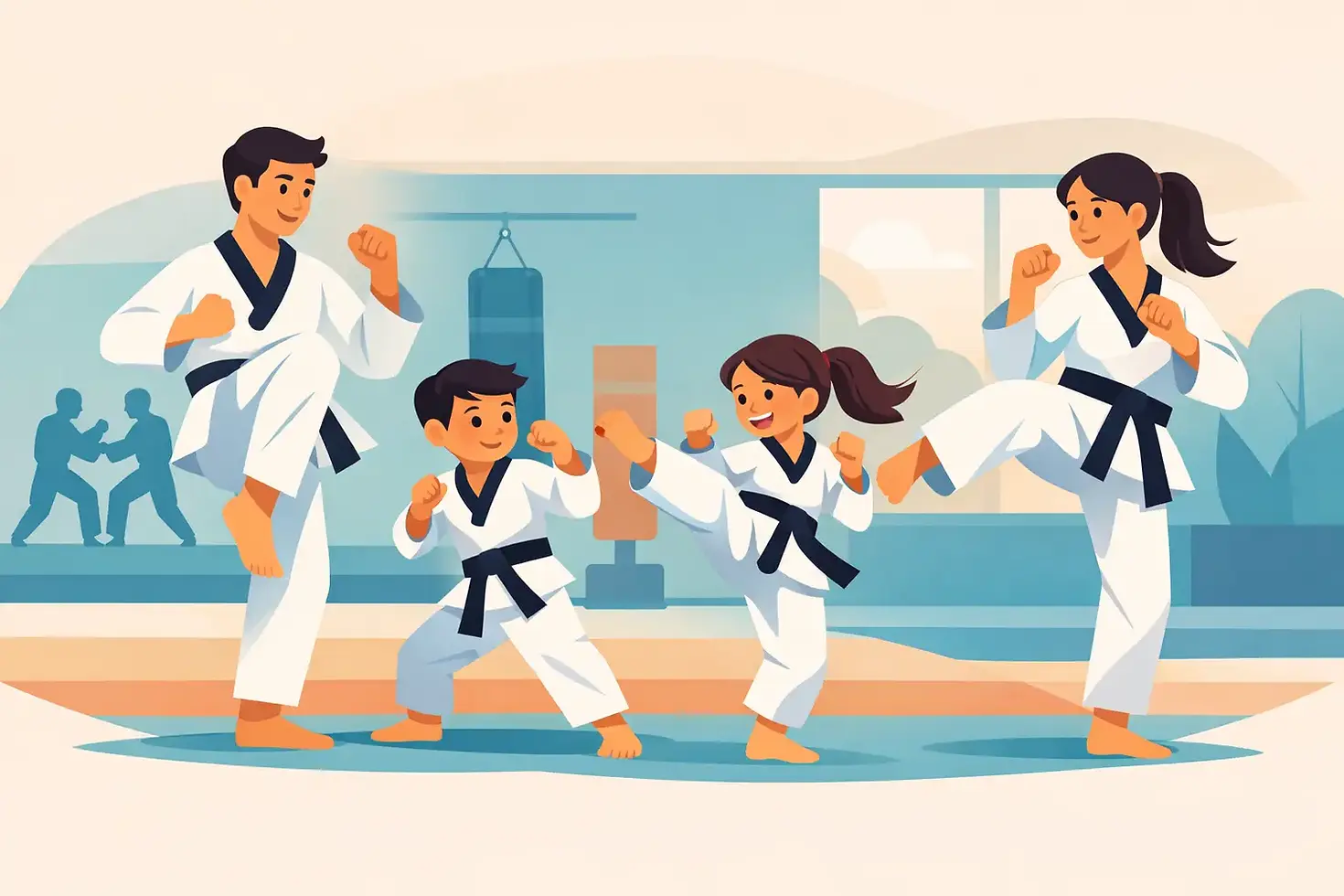
Why Family Taekwondo Classes Work for Everyone
- Master Lee's Taekwondo
- Aug 6
- 5 min read

The best family activities are not the ones everyone simply attends. They are the ones that give each person a reason to show up, work hard, and feel proud of progress. Family taekwondo classes create that kind of shared experience. A parent and child may begin at different skill levels, but both can practice focus, self-control, fitness, and respect on the same training floor.
For busy Lincoln and Omaha families, that matters. Instead of coordinating separate activities across town, families can make training a meaningful part of their weekly routine. Taekwondo becomes more than exercise or an after-school program. It becomes time spent building stronger habits and stronger relationships together.
What Makes Family Taekwondo Classes Different?
A family class is not simply an adult class with children added in. Good instruction recognizes that students learn differently at every age. Children need clear direction, positive encouragement, and room to develop coordination and confidence. Parents and teens may be looking for a practical fitness routine, stress relief, or a new personal challenge.
The shared setting brings those goals together. Everyone learns the same core values: listen carefully, practice with purpose, show respect, and keep going when something feels difficult. A child sees that Mom or Dad is willing to be a beginner. A parent sees their child work through frustration, remember a pattern, or earn a new belt rank through steady effort.
That mutual perspective is powerful. It gives families a common language for growth that can continue at home, at school, and in everyday challenges.
Benefits That Reach Beyond the Dojang
Taekwondo teaches kicks, blocks, stances, and forms, but the lasting value is often found in what students carry into the rest of their lives. Families who train together gain physical benefits, but they also build routines and attitudes that support success far beyond class.
Confidence grows through earned progress
Confidence is not about being the loudest person in the room. Real confidence comes from knowing you can learn, improve, and respond calmly when something is hard. In Taekwondo, progress is visible. A student who once struggled to balance on one leg can eventually perform a kick with control. A beginner who felt nervous walking into class can learn a form in front of others.
When families celebrate those moments together, the encouragement feels especially meaningful. Children learn that effort is worth recognizing. Adults are reminded that growth does not have an age limit.
Discipline becomes a family habit
Every belt rank requires practice, patience, and attention to detail. Students learn that improvement rarely happens in one big leap. It happens through showing up consistently, listening to instruction, and trying again.
That lesson can make a difference at home. A child who understands the value of practice may approach homework or chores with more responsibility. A parent who makes time to train sends a clear message: healthy routines and personal goals are worth protecting. Family training turns discipline from a lecture into something everyone practices.
Fitness feels more motivating together
Taekwondo provides active, full-body movement that can improve balance, flexibility, coordination, strength, and endurance. It also gives students a skill to focus on, which can feel more engaging than an ordinary workout.
Family participation can make fitness easier to sustain. On days when one person does not feel motivated, another family member can provide the push to attend class. The goal is not to compare who is stronger, faster, or more flexible. It is to build healthy habits and recognize each person’s progress.
Respect and self-control get real practice
Martial arts instruction gives children and adults a structured way to practice respect. Students bow, listen, wait their turn, follow directions, and treat training partners with care. These are simple actions, but repeated practice helps turn them into habits.
Self-control is just as valuable. Students learn to use technique with control, manage frustration, and respond thoughtfully rather than impulsively. For children, those skills can support better choices at school and at home. For adults, they can offer a useful reset after a demanding day.
Is a Family Class Right for Your Family?
Family Taekwondo is a strong fit for many households, especially those who want an activity with purpose behind it. It can be a great choice for parents who want to be more active, children who need a confidence-building outlet, or families looking for a positive routine they can share.
Still, the right program depends on ages, schedules, and individual goals. A preschooler may thrive in an age-specific class designed around early listening skills, movement, and coordination. An older child may benefit from a children’s program where they can train alongside peers at a similar developmental stage. Teens and adults may prefer a class that gives them more time to focus on fitness, technique, and stress management.
That does not mean families have to choose between training together and receiving the right instruction. Many families combine age-specific classes with opportunities to train together. The best approach is the one that helps each student feel challenged, supported, and excited to return.
How Parents Can Help Children Get More From Training
A child does not need to become a black belt overnight to gain something meaningful from Taekwondo. Parents can help by focusing on attitude and effort rather than perfect performance. Ask what they practiced, what felt challenging, or what they are proud of instead of only asking whether they earned a stripe or belt.
It also helps to make class attendance predictable. When training is treated as a regular commitment, children learn to follow through even when they feel tired or distracted. Of course, family schedules are real. School events, work demands, and busy seasons happen. Consistency matters more than perfection.
Most importantly, model the behavior you want your child to learn. If you train beside them, they will see you listen to instructors, accept corrections, and keep practicing. If you are cheering from the sidelines, show interest in the values behind the techniques. Either way, your support gives their effort greater meaning.
A Welcoming Start for Beginners
Many parents hesitate because they have never studied martial arts themselves. Others worry that their child will be behind if they are not naturally athletic. Those concerns are common, and neither should prevent a family from trying a class.
Taekwondo is built on progression. Beginners start with fundamentals and develop skills step by step. Students do not need previous experience to learn proper stances, basic kicks, or the expectations of the training floor. What matters most is a willingness to listen, practice, and encourage one another.
At Master Lee’s Taekwondo, families can find structured instruction designed to meet students where they are, from young children taking their first steps in martial arts to adults returning to fitness with a clear goal in mind. The environment should feel disciplined, but never intimidating. Every student deserves to feel seen, challenged, and supported.
The Shared Win That Matters Most
Belt promotions, stronger kicks, and improved fitness are all reasons to be proud. Yet one of the greatest rewards of family training is quieter: a child who carries themselves with more confidence, a parent who feels healthier and more patient, or a family that has found one hour each week to work toward something positive together.
That is the kind of progress worth making time for. Start where you are, encourage each other through the difficult parts, and let every class become a chance to build confidence, discipline, and connection as a family.


Comments